Sometimes the story is found in an unusual set, a rare card back, or the way cards were distributed. This one begins somewhere simpler: with the names on the front.
There was a period when baseball occupied a place in American culture unlike almost anything else. Its biggest stars were not simply athletes. They became national celebrities—faces recognized far beyond the ballpark—and the cards they left behind became some of the hobby’s most enduring pieces of history.
Five cards carry us across 22 years: from Satchel Paige’s long-delayed arrival in the Major Leagues and Roy Campanella’s rise in Brooklyn, through Mickey Mantle inheriting center field in New York, Sandy Koufax standing just before his astonishing peak, and Willie Mays cementing his place among the game’s greatest all-around players.
Satchel Paige. Roy Campanella. Mickey Mantle. Sandy Koufax. Willie Mays. Five cards that capture not only baseball icons, but a game and a hobby transforming around them.
A Rookie in Name Only
Before Satchel Paige reached Major League Baseball, he was already a legend.
For decades, Paige dominated hitters in the Negro Leagues and barnstormed across America. Stories about his talent became almost mythical—partly because segregation denied him the opportunity to prove it regularly against Major League competition.
That finally changed after Jackie Robinson broke baseball’s color barrier. Cleveland signed Paige in 1948, making him the oldest rookie in Major League history. He went 6–1 with a 2.48 ERA and helped Cleveland win the World Series.
Then came this card.
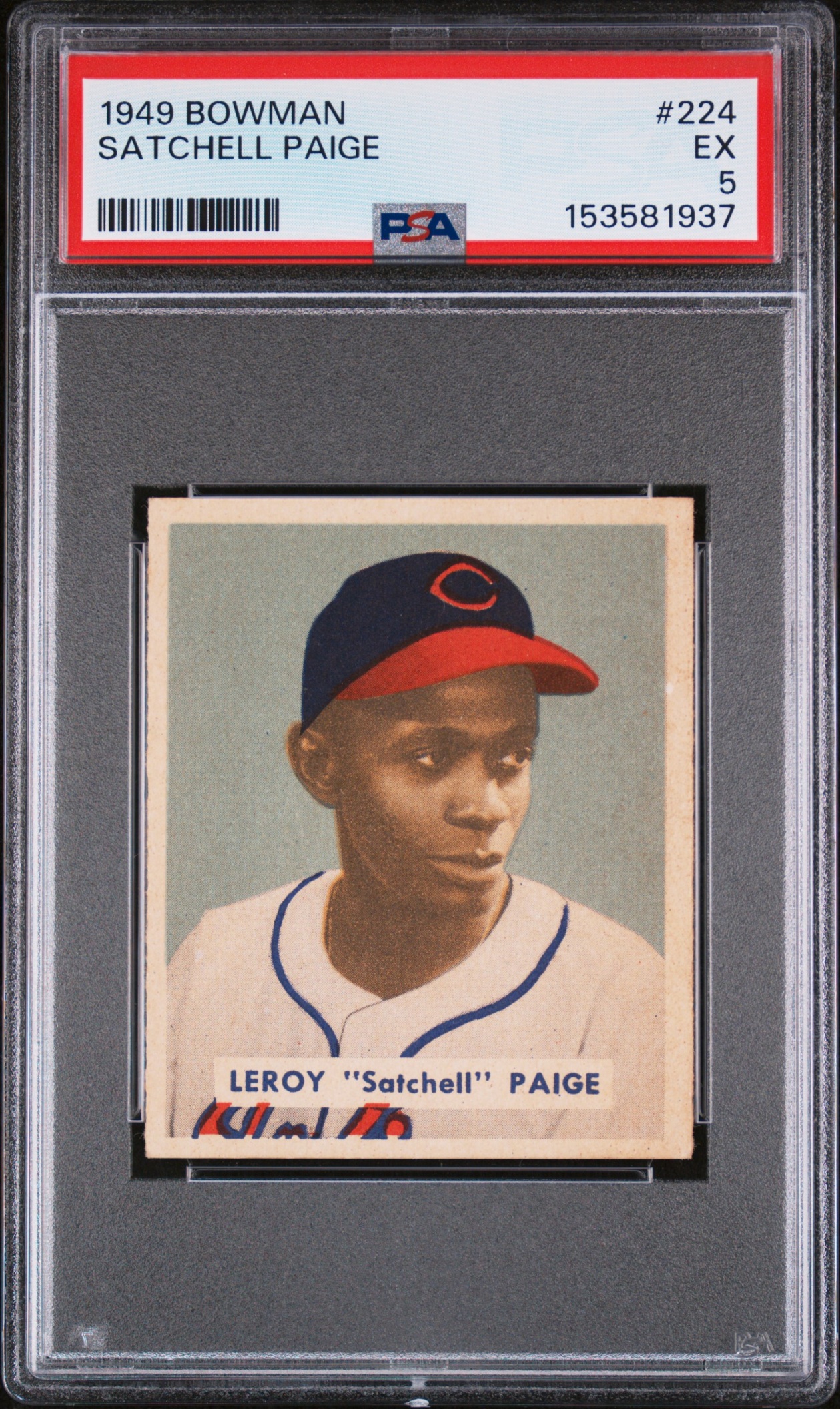
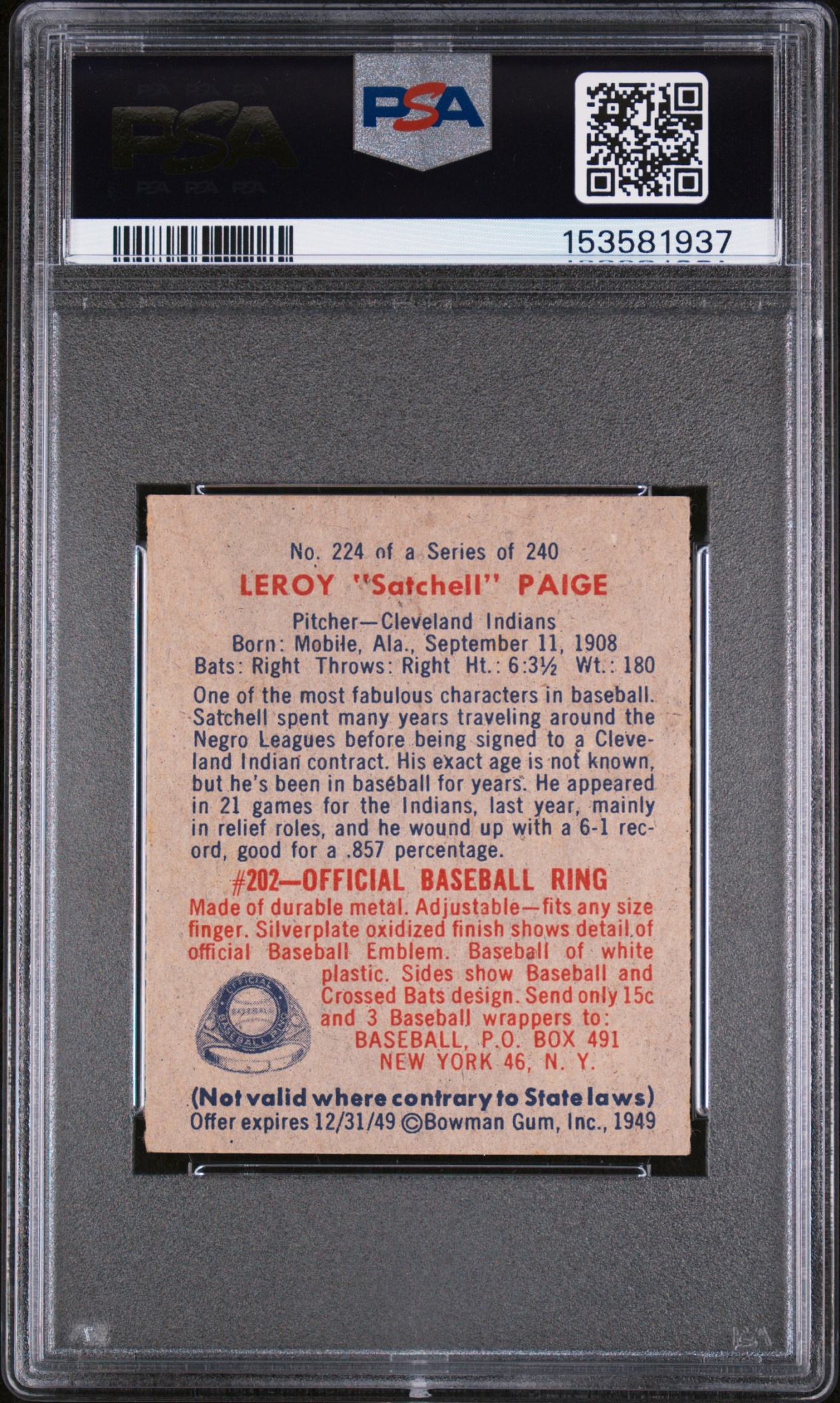
The 1949 Bowman Satchel Paige is widely recognized as his Major League rookie card, issued when Paige was finally appearing in a mainstream baseball-card set. One of the greatest pitchers of his generation had been playing professional baseball for more than two decades before collectors could pull his Major League card.
That is why this is not simply a Satchel Paige card. It is a piece of the story of integration, recognition, and a baseball legend finally appearing in the hobby’s mainstream.
More Than Jackie
When we talk about the integration of baseball, the story understandably begins with Jackie Robinson. But it did not end with him.
Roy Campanella spent years playing in the Negro Leagues before joining the Brooklyn Dodgers organization. By 1948, he was in the Major Leagues—and “Campy” soon became a superstar.
A catcher with tremendous power and elite defensive ability, Campanella won the National League MVP award in 1951, 1953, and 1955.
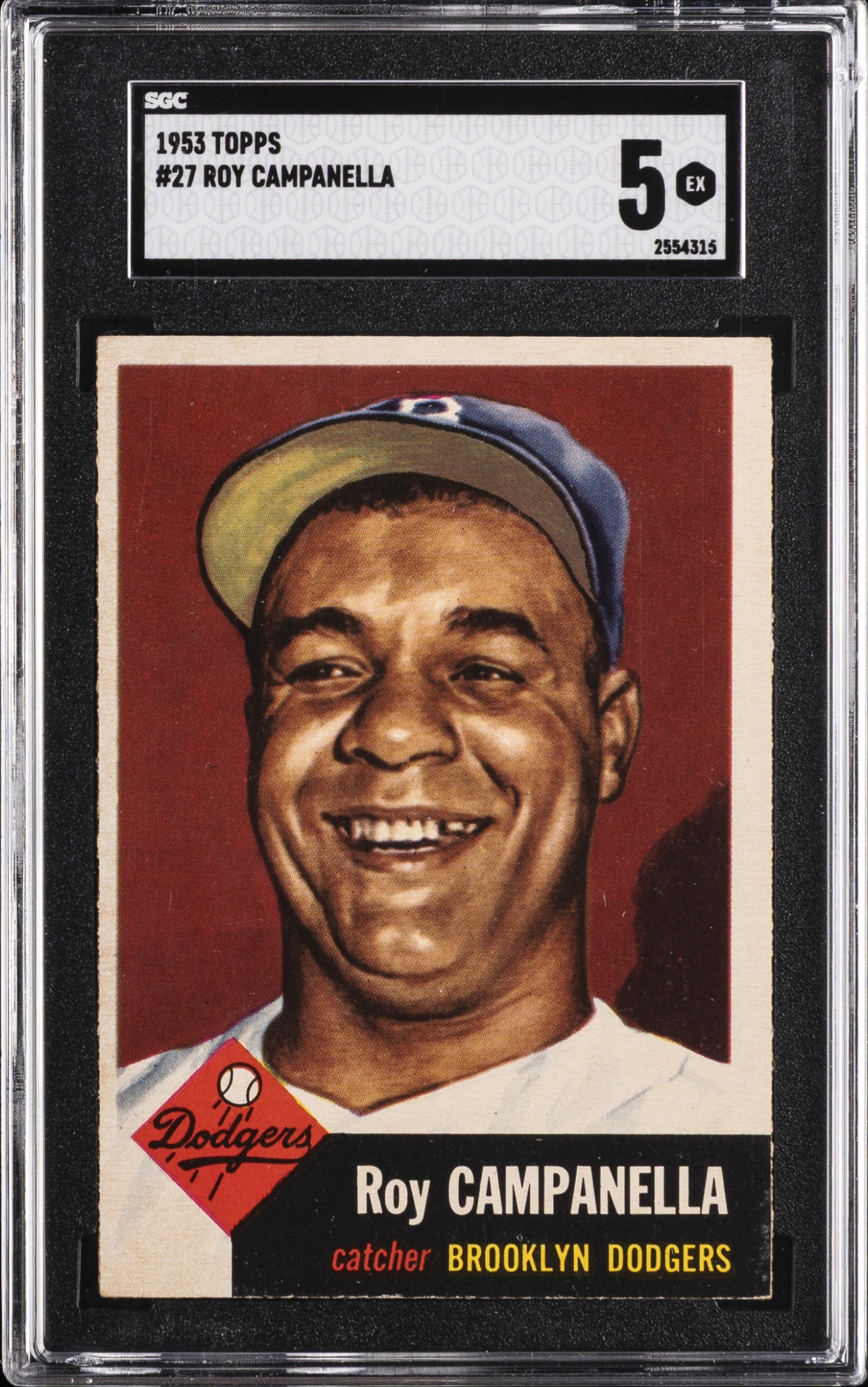
This 1953 Topps Roy Campanella comes from the middle of that extraordinary run. Campanella hit 41 home runs and drove in 142 runs that season, winning his second MVP award while helping Brooklyn capture another National League pennant.
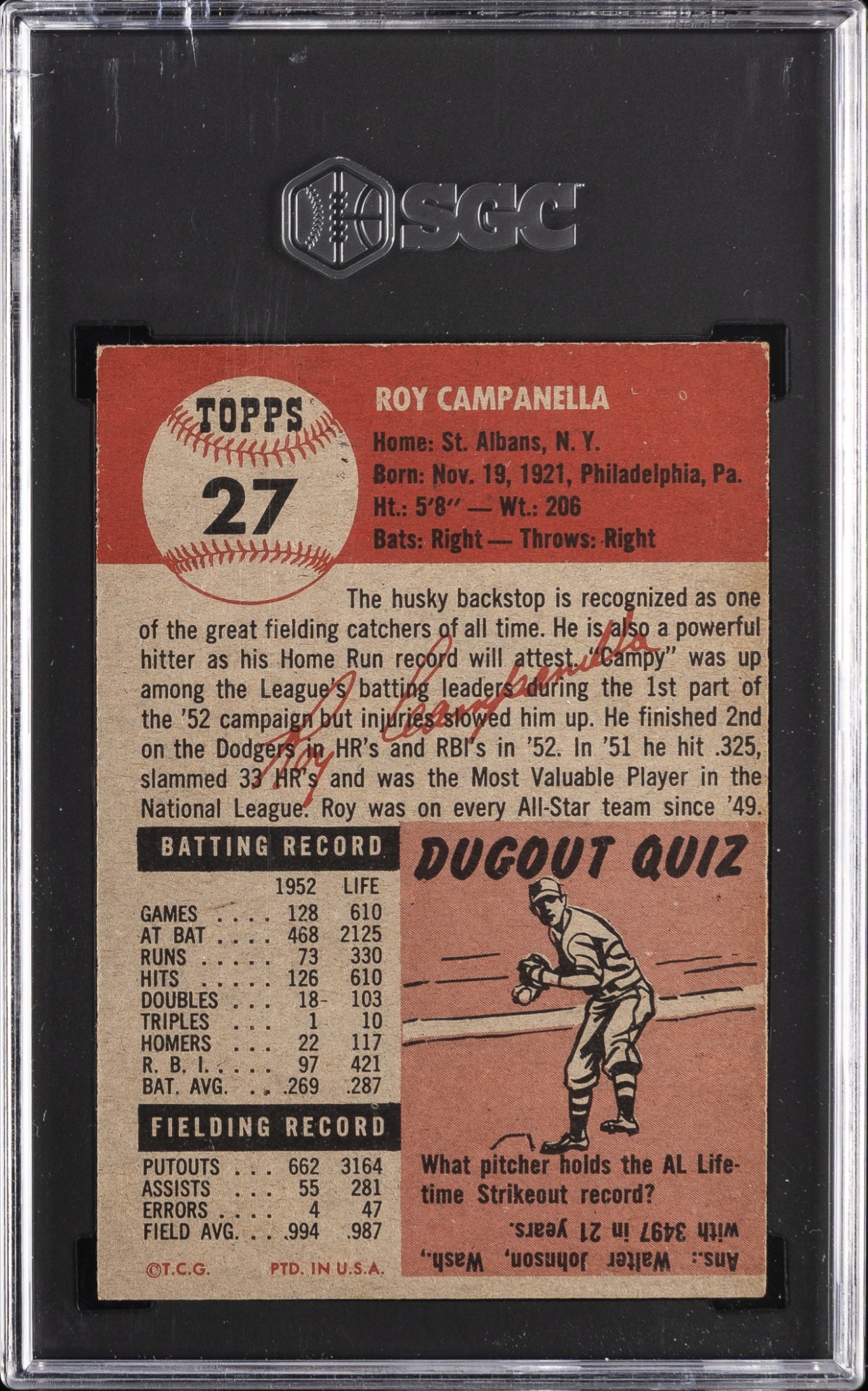
The card itself also shows how quickly the hobby had changed. Only four years separate the relatively simple 1949 Bowman Paige from this colorful 1953 Topps design: a large portrait, bold color, team logo, statistics, biography, and even a trivia question on the back.
The modern baseball card was taking shape—and one of baseball’s greatest catchers was right there on the front of it.
The Next Yankee Icon
Imagine replacing Joe DiMaggio.
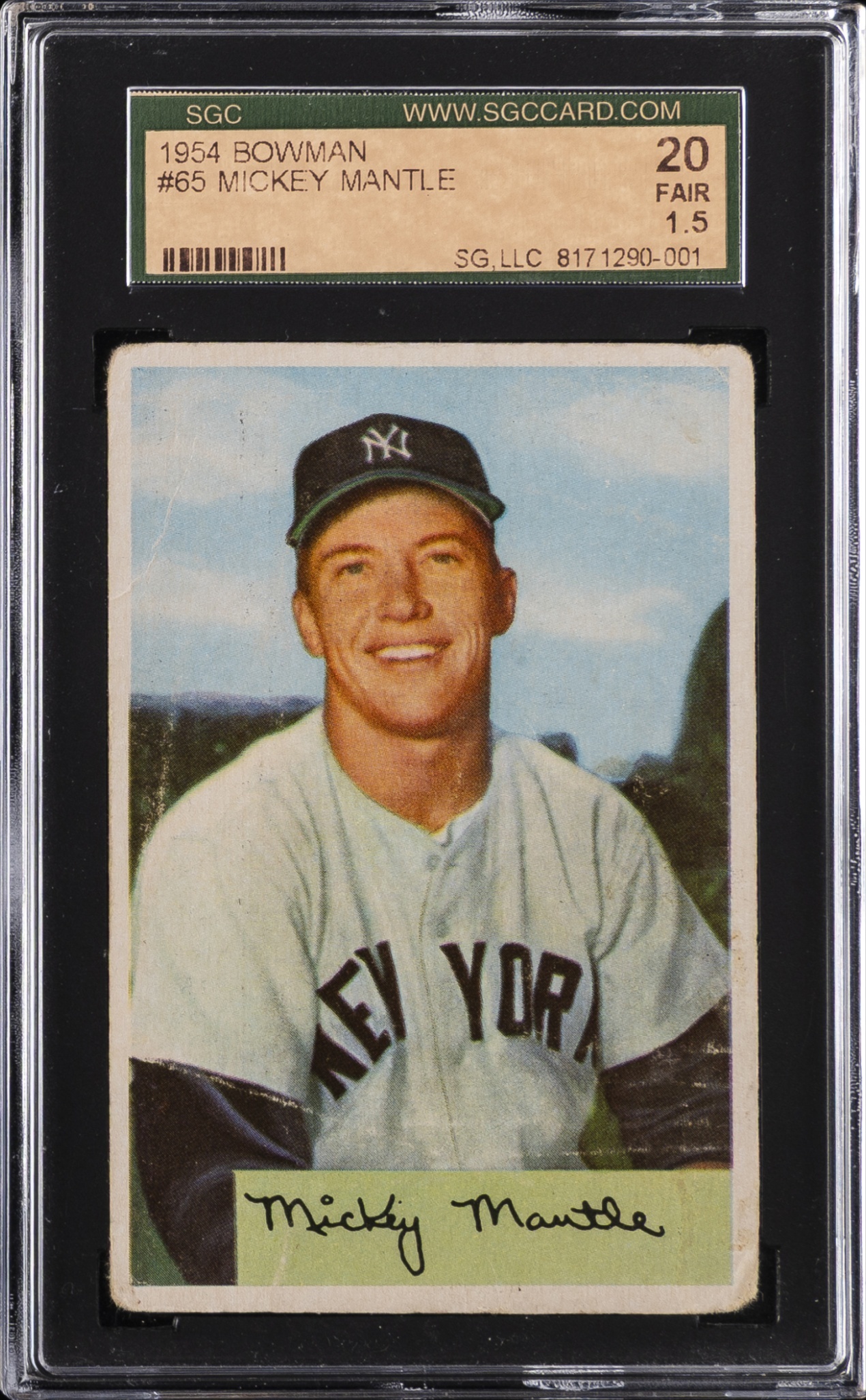
That was the situation a young kid from Commerce, Oklahoma walked into when he arrived in New York. Mickey Mantle debuted with the Yankees in 1951. DiMaggio retired after that season, and before long center field at Yankee Stadium belonged to Mantle.
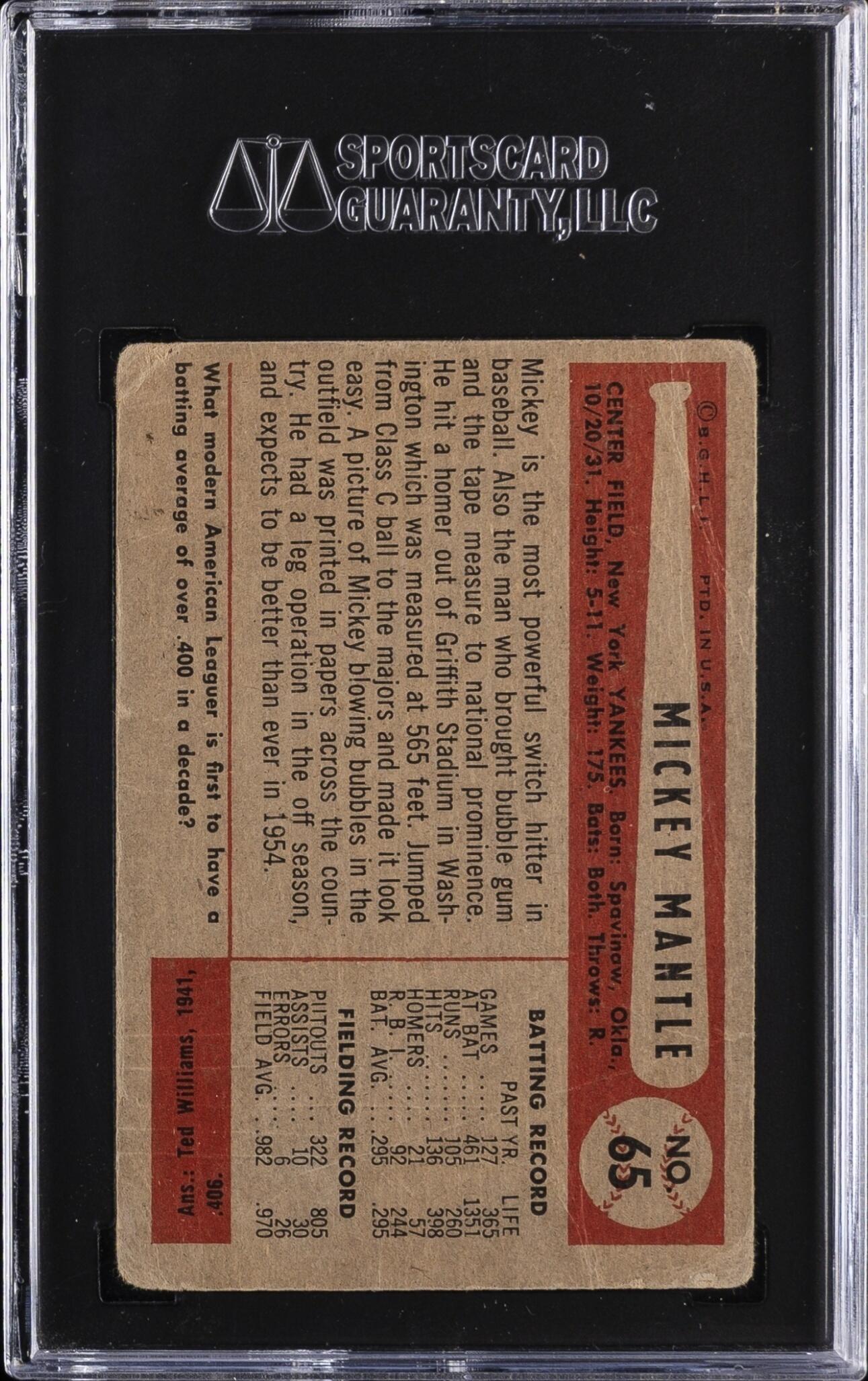
By the time this card appeared in 1954, the transformation was well underway. Mantle was 22 years old and hit .300 with 27 home runs and 102 RBI that season.
The MVP awards, Triple Crown, and most famous years were still ahead of him. That is part of what makes this 1954 Bowman Mickey Mantle so appealing: it captures Mantle before the mythology was complete.
There is a hobby story here, too. Topps and Bowman were fighting fiercely for the baseball-card market during the early 1950s. Players signed exclusive contracts, and checklists could be shaped by who held the rights to whom.
Mantle appeared in Bowman’s 1954 set—but not Topps’. Within two years, the battle was over. Topps purchased Bowman and became the dominant force in baseball cards.
So this card captures two transitions at once: a young superstar becoming Mickey Mantle, and a baseball-card company nearing the end of its run.
Before He Became Koufax
1960 Topps Sandy Koufax #343 · SGC 5
To be continued…The Complete Ballplayer
1971 Topps Willie Mays #600 · SGC 8
To be continued…